c-o-c-o-a — Perception
Soft Stone
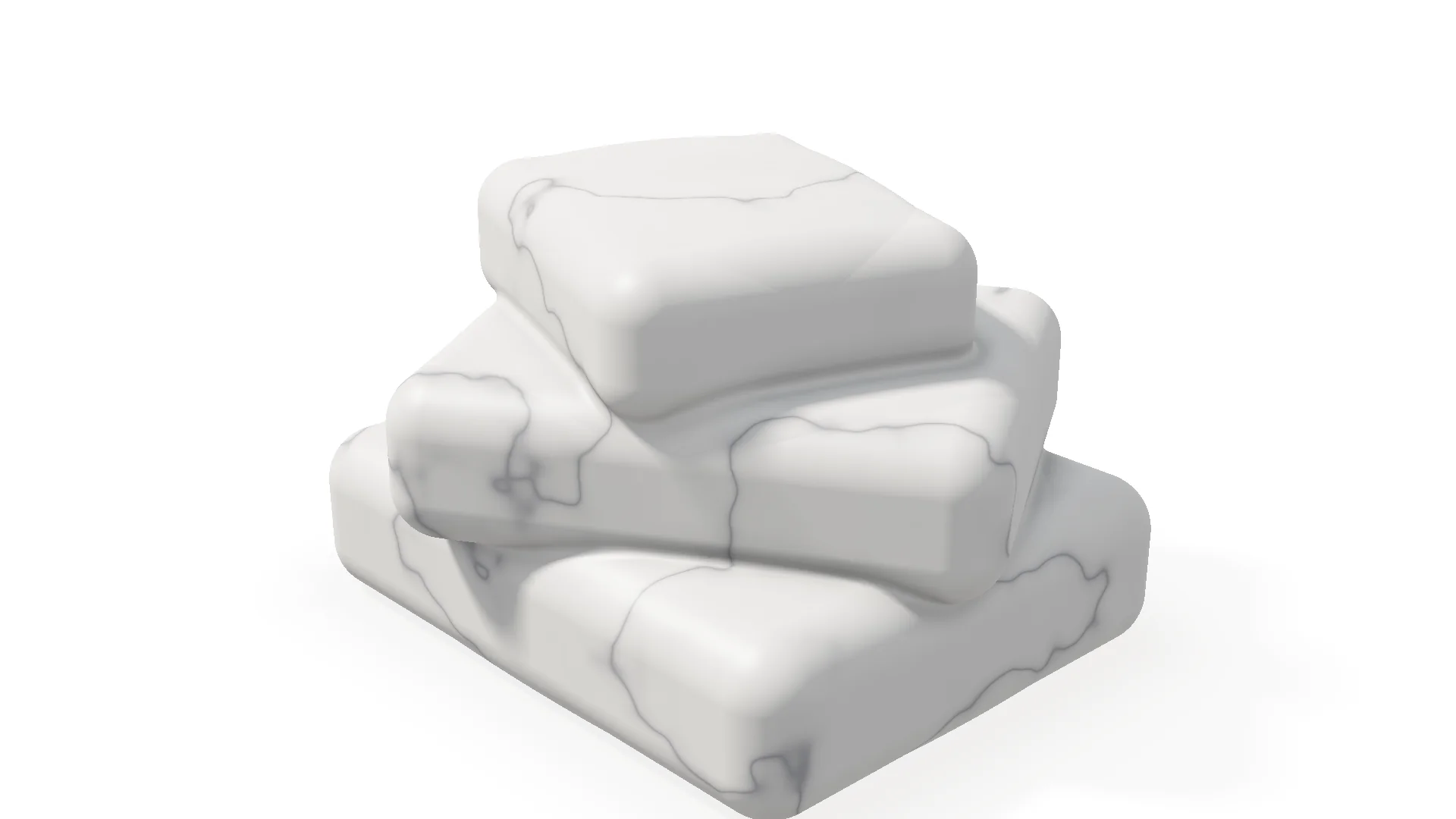
Can a stone look soft enough to sink into?
Facts
- Year
- 2026
- Axis
- Perception
- Material
- Marble and mineral composites (in testing)
- Method
- Parametric surface studies, blind touch tests
- Production
- Contract processes without mold investment (planned)
- Status
- In progress
The question
We read a material with our eyes before we touch it. A cushion promises to give way; a stone promises to resist. Soft Stone looks for the gap between those two promises.
The project asks whether geometry alone can make a hard material look soft: swelling, sagging and resting forms in stone, so that the eye expects softness and the hand finds the opposite.
Conditions
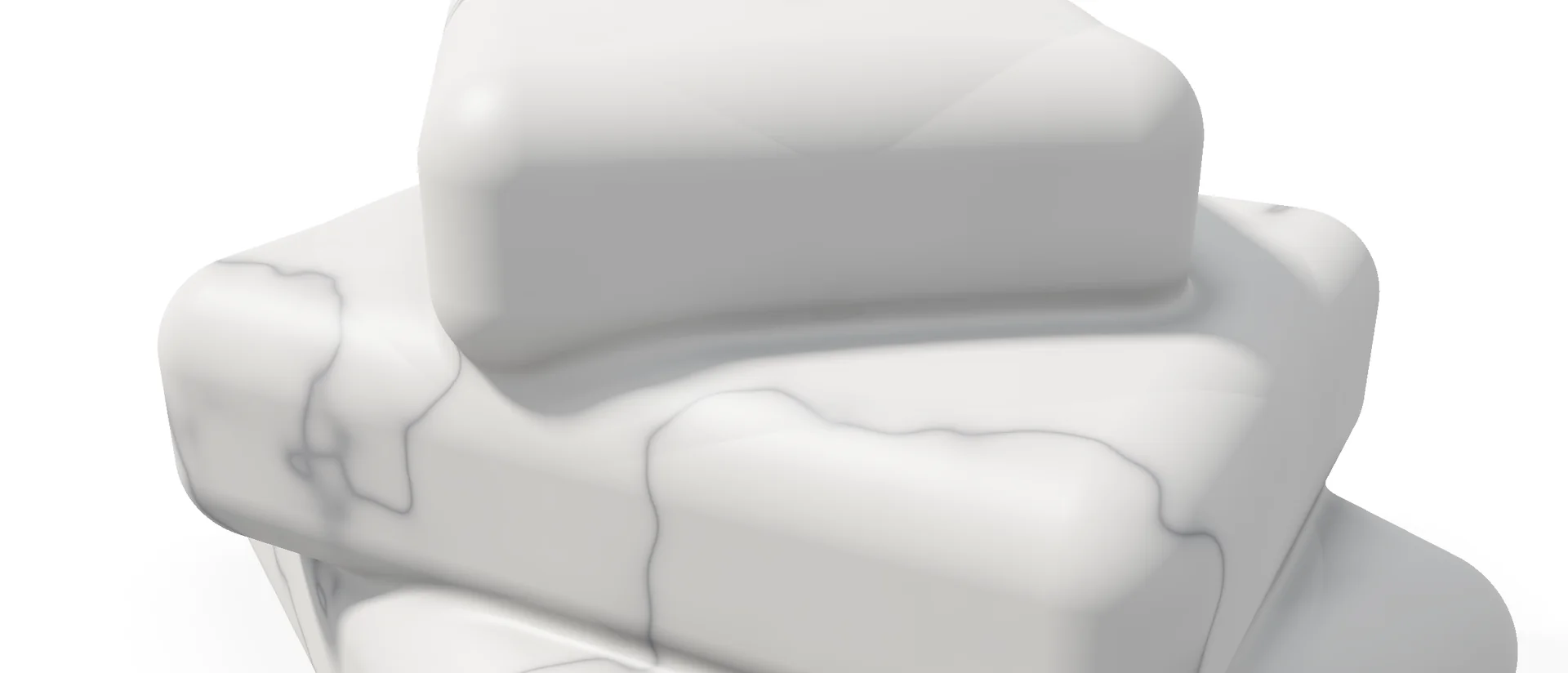
Softness is read from a handful of cues: a surface that swells at its center, edges that round over, one form that seems to press into another. We model these cues parametrically and adjust them until the reading flips.
Light is part of the condition. A raking light exaggerates swelling; a flat light hides it. Each study is checked under both.
Method
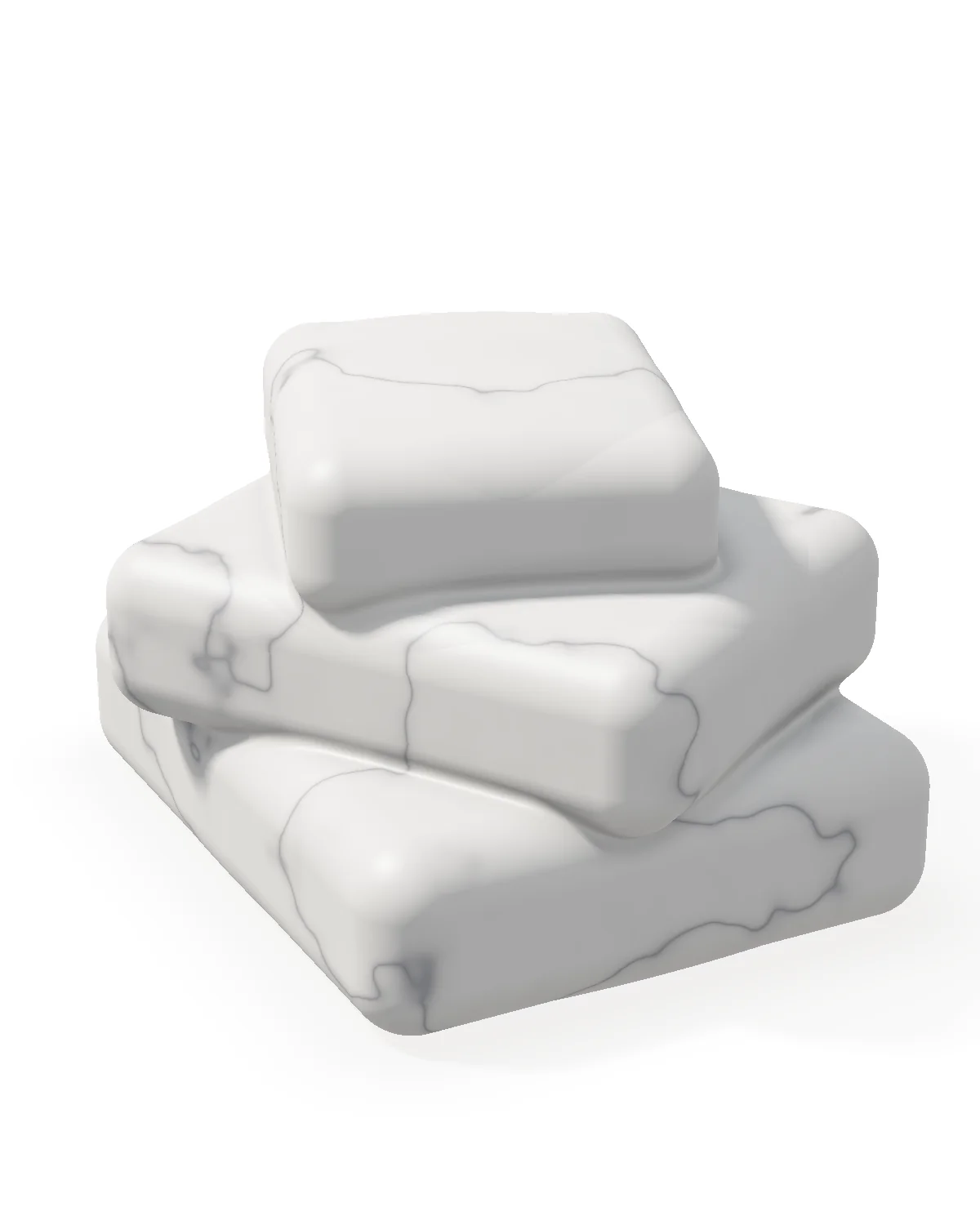
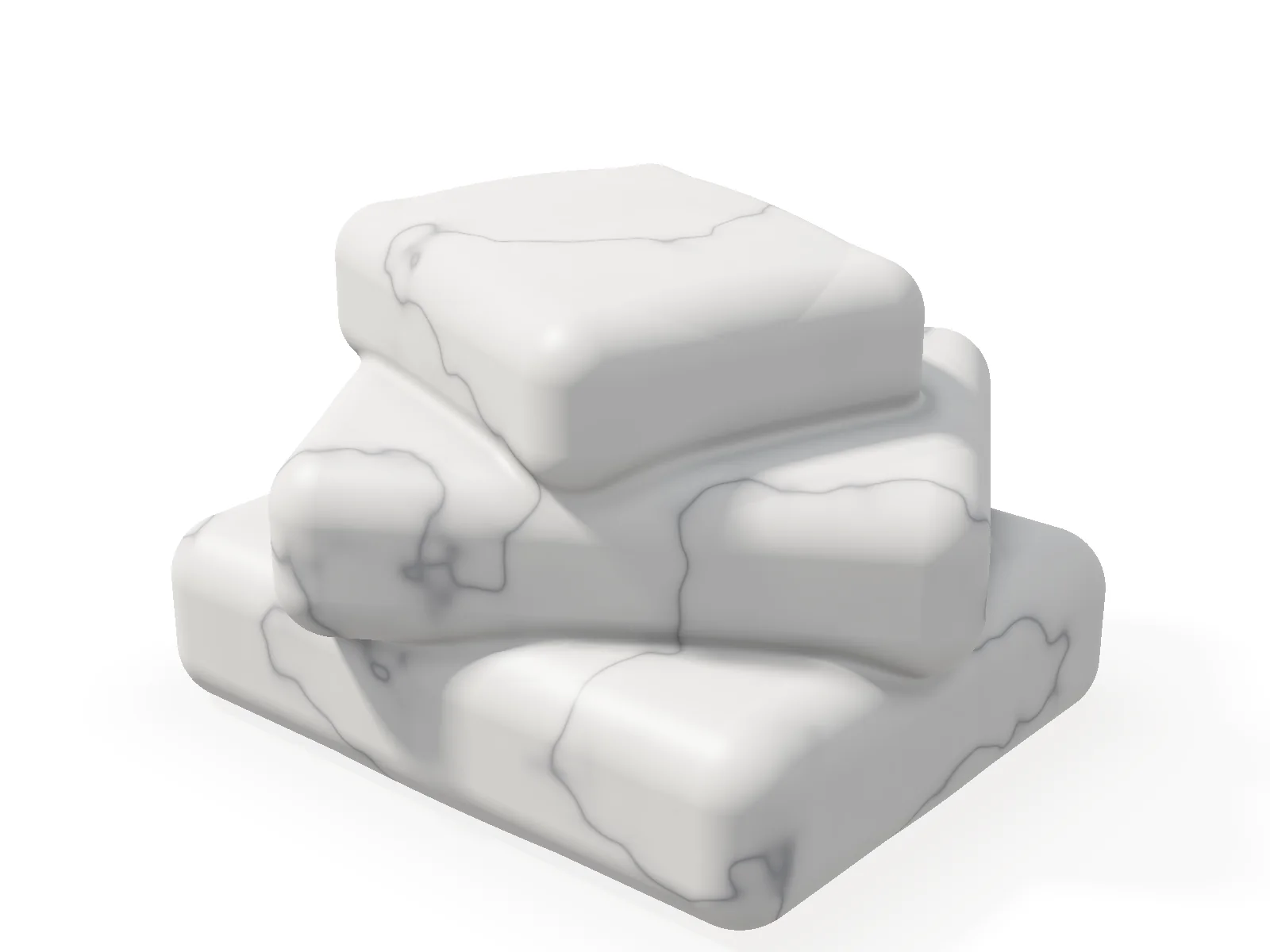
In Rhino and Grasshopper every cue is a parameter: radius, swell, compression, the angle at which one form meets another. Changing a value changes how soft the stone appears.
Physical samples follow, and each is touched blind before it is seen. The blind touch tests ask whether people can tell materials apart by hand alone, and when the eye overrides the hand.
Why it matters
An object that surprises the hand is remembered. Soft Stone uses that moment of surprise to slow people down and make them look again, which is the reason c-o-c-o-a exists.
Open questions
- Does the illusion survive daylight, or only the studio?
- How far can a form swell before it reads as inflated rather than soft?
- Does the surprise fade after the first touch?
Status
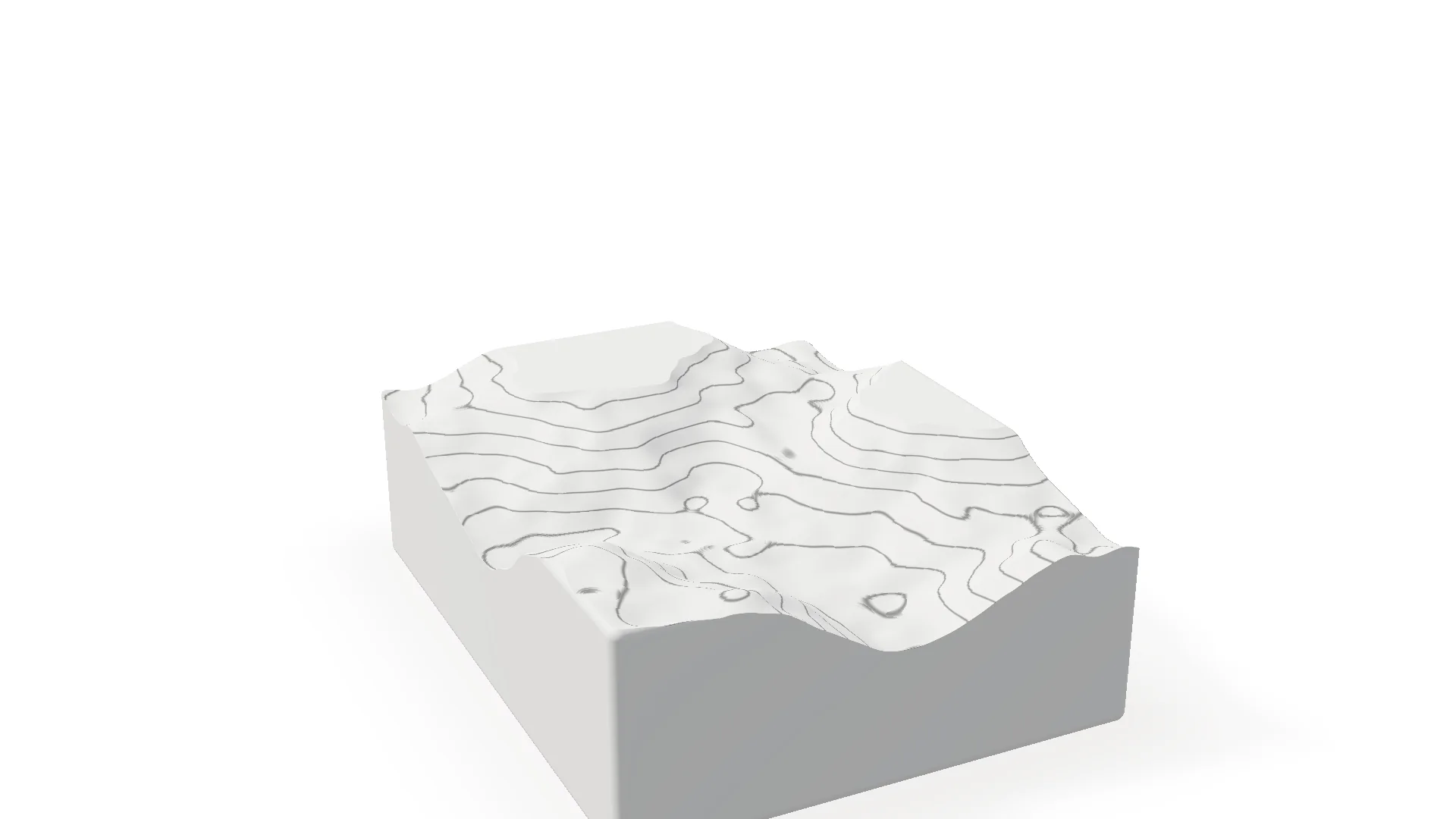
Soft Stone is an active line of research. The images on this page are studio renders of parametric studies, not finished pieces.
Credits
- Design and research
- c-o-c-o-a
- Tools
- Rhino, Grasshopper
- Images
- Studio renders, c-o-c-o-a